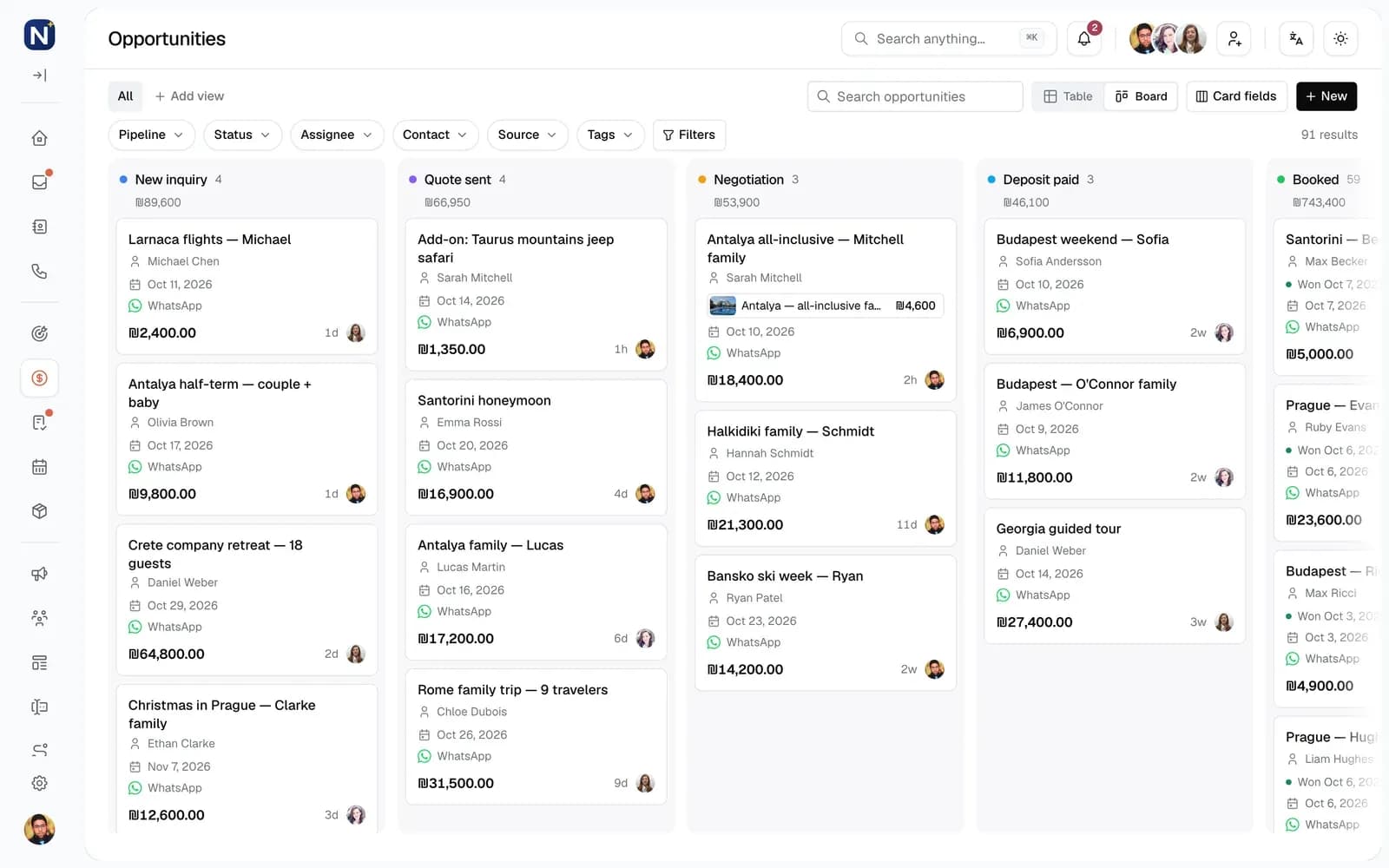
The system worked. Getting around it didn't.
The backend was proven and the business ran on it every day. The goal was a faster interface for daily work, without replacing what already worked underneath.
Hard to navigate
The CRM/ERP did its job, but it had become hard to find your way around the screens staff use every day.
Used all day, every day
Orders, stock, customers and reporting all run through it, so any slowness costs time on every task.
A backend not to put at risk
The backend and the data were business-critical. Whatever changed on screen, they had to stay exactly as they were.
Three decisions that kept the business running.
Audit how it is used first
Before redesigning anything, we ran a UX audit of the screens staff use every day and looked at how the system was actually used.
A new front end, designed for speed
Orders, stock, customers and reporting got a new front end, designed for the speed of daily work.
The backend stays as it is
The new front end sits on top of the existing backend. No data migration and no change to business logic, so the data and the rules the business runs on did not change.
After the redesign, we still support it.
Ongoing support
We continue to support the system after the redesign.
The same backend
Data and business logic run as they did before the redesign.
Screens for daily work
Orders, stock, customers and reporting on the front end redesigned for speed.